
Walk into any large pharmacy or browse any e-commerce platform and you will find an array of devices marketed for home back pain relief. TENS machines, heat pads, infrared belts, cold therapy wraps, and even portable ultrasound devices all promise to relieve spinal discomfort from the comfort of your living room. Some of them genuinely help. Others are largely ineffective for the conditions they are most commonly used to treat. And none of them address the underlying cause of structural back pain.
This article provides an honest appraisal of what each major home treatment modality can and cannot do, and helps you understand when professional clinical care is the option you actually need.
TENS Machines: Pain Gate Theory in a Box
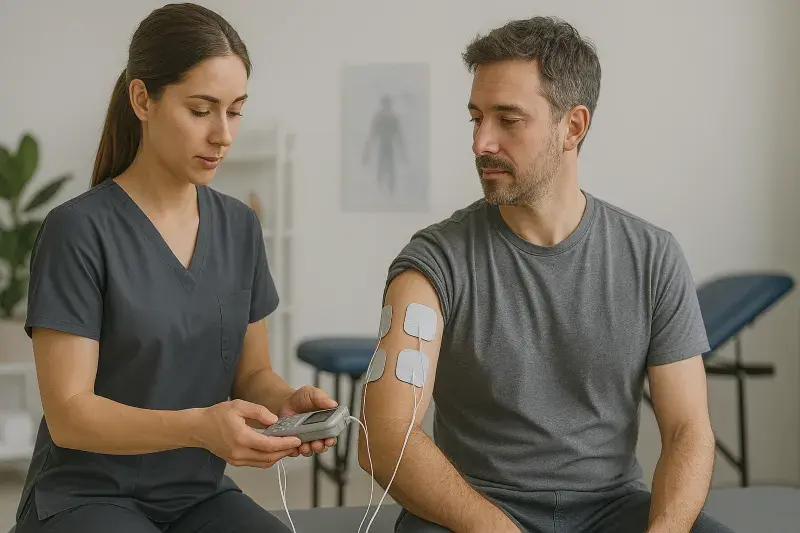
TENS stands for Transcutaneous Electrical Nerve Stimulation. A TENS device delivers small electrical pulses through electrode pads placed on the skin, stimulating sensory nerve fibres. The mechanism by which it reduces pain is based on the gate control theory of pain — the principle that stimulating large sensory nerve fibres can inhibit the transmission of pain signals through smaller nerve fibres, effectively ‘closing the gate’ on pain perception.
What TENS does well: provides temporary, often significant pain relief during and immediately after use for muscle spasm, acute muscular back pain, and mild nerve-related discomfort. It is safe, non-addictive, and can reduce the need for oral pain medication during acute flares.
What TENS does not do: treat the underlying cause of back pain. It does not reduce disc inflammation, decompress a herniated disc, or correct structural spinal problems. The pain relief it provides is real but temporary — typically lasting minutes to hours after use. For conditions involving significant nerve compression, TENS is often ineffective and can occasionally increase discomfort.
Heat Therapy: When Warmth Helps and When It Hinders
Heat application — through hot water bottles, heat pads, wheat bags, or infrared wraps — is one of the oldest and most widely used self-care interventions for back pain. Its effectiveness varies considerably depending on the type of pain being treated.
Heat is most beneficial for: muscular back pain caused by spasm, tension, or overuse. Warmth increases local blood flow, reduces muscle viscosity and stiffness, and can soothe pain through thermal receptor stimulation. For the morning stiffness associated with chronic low back pain, a heat pad applied before getting out of bed can genuinely ease the first movements of the day.
Heat is counterproductive for: acute inflammatory pain. If the back pain is associated with acute disc herniation, nerve root inflammation, or a recent injury (within the first 48-72 hours), applying heat increases blood flow to an already-inflamed area and can worsen swelling and pain. In the acute inflammatory phase, cold therapy is more appropriate — cold reduces blood flow, limits swelling, and has a mild local anaesthetic effect.
Cold Therapy: The Often-Overlooked Option
Cold therapy (ice packs, cold gel packs, or even bags of frozen peas wrapped in a cloth) is most effective in the first 24-72 hours after an acute back injury. It reduces tissue inflammation, limits secondary swelling, and provides direct pain relief through the numbing effect of cold on peripheral pain receptors.
Many people avoid cold therapy because it is uncomfortable. A useful compromise is contrast therapy — alternating 10 minutes of cold with 10 minutes of heat — which drives a pumping action through local blood vessels, simultaneously reducing inflammation and increasing metabolic clearance of injury by-products.
Portable Ultrasound: Limited Evidence for Home Use
Consumer-grade portable ultrasound devices are marketed as delivering the therapeutic benefits of clinical ultrasound therapy at home. The clinical evidence for therapeutic ultrasound in back pain management is, even in professional settings, mixed. For home use, where device calibration, frequency settings, and application technique are rarely optimal, the evidence for meaningful benefit is limited. These devices are unlikely to cause harm, but they represent a relatively poor return on investment for most back pain presentations.
The Fundamental Limitation of All Home Modalities
Every home treatment modality for back pain shares the same fundamental limitation: it addresses symptoms without identifying or treating the cause. For mild, acute muscular back pain that resolves within two to three weeks, this is entirely appropriate. But for back pain that persists beyond three to four weeks, that involves radiating symptoms, that is associated with neurological changes (weakness, numbness, bladder changes), or that keeps recurring in cycles, home devices are not the solution. Professional assessment and targeted non-surgical care — of the kind provided at ANSSI Wellness — is what actually addresses the structural source of the problem.
A Sensible Approach to Home Treatment
Rather than dismissing home treatment tools entirely, the most pragmatic approach is to use them appropriately — as adjuncts to professional care, or as short-term symptom management for clearly uncomplicated mechanical back pain. Specific guidance:
- Acute muscular pain (first 72 hours): cold therapy for 15-20 minutes several times daily; avoid heat
- Chronic muscular tension and stiffness: heat before activity, combined with gentle movement
- Nerve-related or inflammatory pain: neither heat nor TENS is likely to be effective; professional assessment is indicated
- Any pain lasting more than 3-4 weeks: professional evaluation should replace, not supplement, home treatment
Conclusion
Home treatment devices have a genuine but limited role in back pain management. Used at the right time for the right type of pain, they can provide meaningful symptomatic relief. But they cannot substitute for understanding what is actually causing your back pain, and they cannot treat it at its source. If your back pain is persistent, severe, or associated with nerve symptoms, a consultation with the spinal specialists at ANSSI Wellness will tell you what you are actually dealing with — and what treatment will genuinely make a difference.