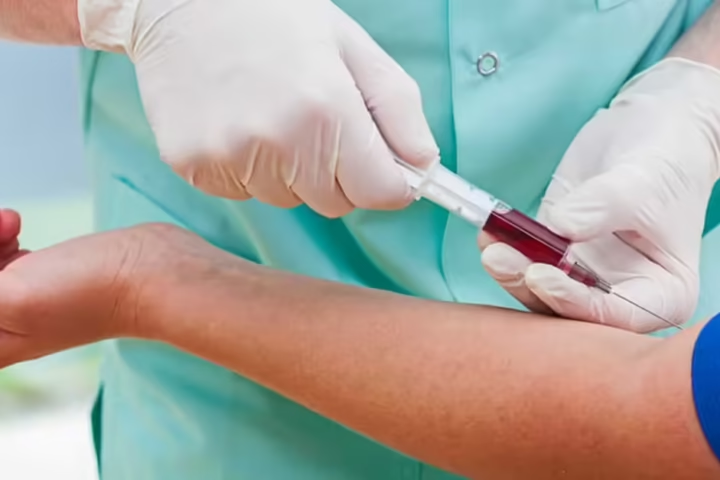


Something shifts around 30. You stop bouncing back from a late night the way you used to, and suddenly your parents’ health talk at dinner starts making a bit more sense. That’s usually the point doctors start recommending certain medical tests after 30 — not because you’re suddenly “old,” but because this is when early damage from years of habits starts showing up in the numbers, even if you feel totally fine.
I remember putting off my own full-body checkup for almost two years. Kept telling myself I felt healthy, so why bother. Turns out “feeling fine” and “being fine” aren’t the same thing.
Why 30 Is the Real Turning Point
Doctors don’t pick 30 randomly. It’s roughly when metabolism starts slowing, bone density peaks and begins its slow decline, and lifestyle-related risks (sugar, cholesterol, blood pressure) start compounding. The right medical tests after 30 catch these shifts before they turn into actual problems.
In short: After 30, your body starts showing the cumulative effects of diet, stress, and lifestyle — tests you could skip in your 20s become genuinely useful early-warning tools now.
1. Complete Blood Count (CBC)
This is the baseline test, honestly. It flags anemia, infections, and a bunch of blood disorders. It’s cheap (usually under ₹400 in most Indian labs) and it’s the first thing doctors look at, so it belongs at the top of every medical tests after 30 checklist.
2. Fasting Blood Sugar and HbA1c
India has one of the highest diabetes rates in the world, and a huge chunk of people don’t know they’re prediabetic. HbA1c gives you a 3-month average, which is more reliable than a single fasting reading.
- Fasting sugar: ideally under 100 mg/dL
- HbA1c: under 5.7% is considered normal
3. Lipid Profile (Cholesterol Panel)
Cholesterol issues rarely show symptoms until there’s already a problem. This is one of those medical tests after 30 that people assume is only for “overweight” folks — but I’ve seen slim, fit people with surprisingly bad numbers. Genetics plays a bigger role than most realize.
4. Thyroid Function Test (TSH)
Especially important for women, but men aren’t exempt either. Thyroid issues are sneaky — fatigue, weight changes, mood shifts — and often get misdiagnosed as “just stress” for years before someone finally runs this test.
5. Liver and Kidney Function Tests
If you drink even occasionally, or take painkillers more often than you’d like to admit, these matter. LFT and KFT panels are standard medical tests after 30 in most full-body packages, and they’re worth taking seriously rather than skimming past.
Quick answer: Liver and kidney function tests check enzyme and creatinine levels that reveal organ stress long before you’d feel any symptoms — critical if you drink alcohol, take regular medication, or have a family history of these issues.
6. Vitamin D and B12 Levels
Deficiencies here are shockingly common in India, even among people who get plenty of sun exposure (turns out sunscreen and desk jobs cancel that out). Fatigue, brain fog, and joint pain often trace back to these two numbers.
[link to related guide on early signs of illness here]
7. Blood Pressure Screening
This one’s free and takes two minutes, yet so many people only check it when they’re already at the doctor’s for something else. High blood pressure has almost no symptoms until it’s serious — which is exactly why it’s called the “silent” one.
8. Cancer Screenings (Age and Gender Specific)
This varies quite a bit — women should discuss Pap smears and mammogram timing with a gynecologist, and men over 45 (sometimes younger with family history) should ask about prostate screening. Not everyone needs every screening at 30, but it’s worth having the conversation with your doctor rather than assuming it’s too early.
[link to related guide on women’s health hormone balance here]
How Often Should You Actually Get These Done
Most of the panel above can be done once a year if you’re generally healthy. If you have a family history of diabetes, heart disease, or thyroid issues, your doctor might suggest every 6 months for the relevant tests. It’s not about doing everything constantly — it’s about consistency.
FAQ
Q: Do I need to fast before all these medical tests after 30? Not all of them — fasting sugar and lipid profile typically need 8-10 hours of fasting, but CBC and thyroid tests generally don’t.
Q: How much does a full panel of these tests cost in India? Full-body checkup packages in 2026 typically range from ₹1,200 to ₹3,500 depending on the city and lab, and often include most of what’s listed here.
Q: I feel completely healthy — do I still need these tests? Yes, honestly. Most of these conditions are asymptomatic in early stages, which is exactly the point of testing before symptoms show up.
Q: Should men and women get different tests after 30? The core panel is similar, but women should add hormone and reproductive health screenings, and men should discuss prostate health slightly later, usually mid-40s.
Q: What if one of my results comes back abnormal? Don’t panic over a single number — one abnormal result often just means a re-test or lifestyle tweak. Discuss it with your doctor before assuming the worst.
Conclusion
Turning 30 doesn’t mean something is wrong — it just means your body’s risk profile has quietly shifted. The medical tests after 30 listed here aren’t expensive or complicated, and most take less than a day to complete. Book your annual panel this month if you haven’t already this year — 2026 is a good year to actually stay ahead of it instead of catching up later.
Suggested Image Alt Text: “Doctor reviewing medical tests after 30 checklist with patient”